Kitchen Wall Calendars: Paper, Whiteboard or Screen?
Every family kitchen has a spot — usually near the kettle — where the week's chaos gets pinned, scrawled or displayed. The question is what lives there: the paper calendar from the school fair, a whiteboard covered in three colours of marker, or a screen that syncs with everyone's phones.
Each option has genuine strengths and genuine costs, and the marketing for all three tends to gloss over the costs. Here's the honest version.
The paper calendar
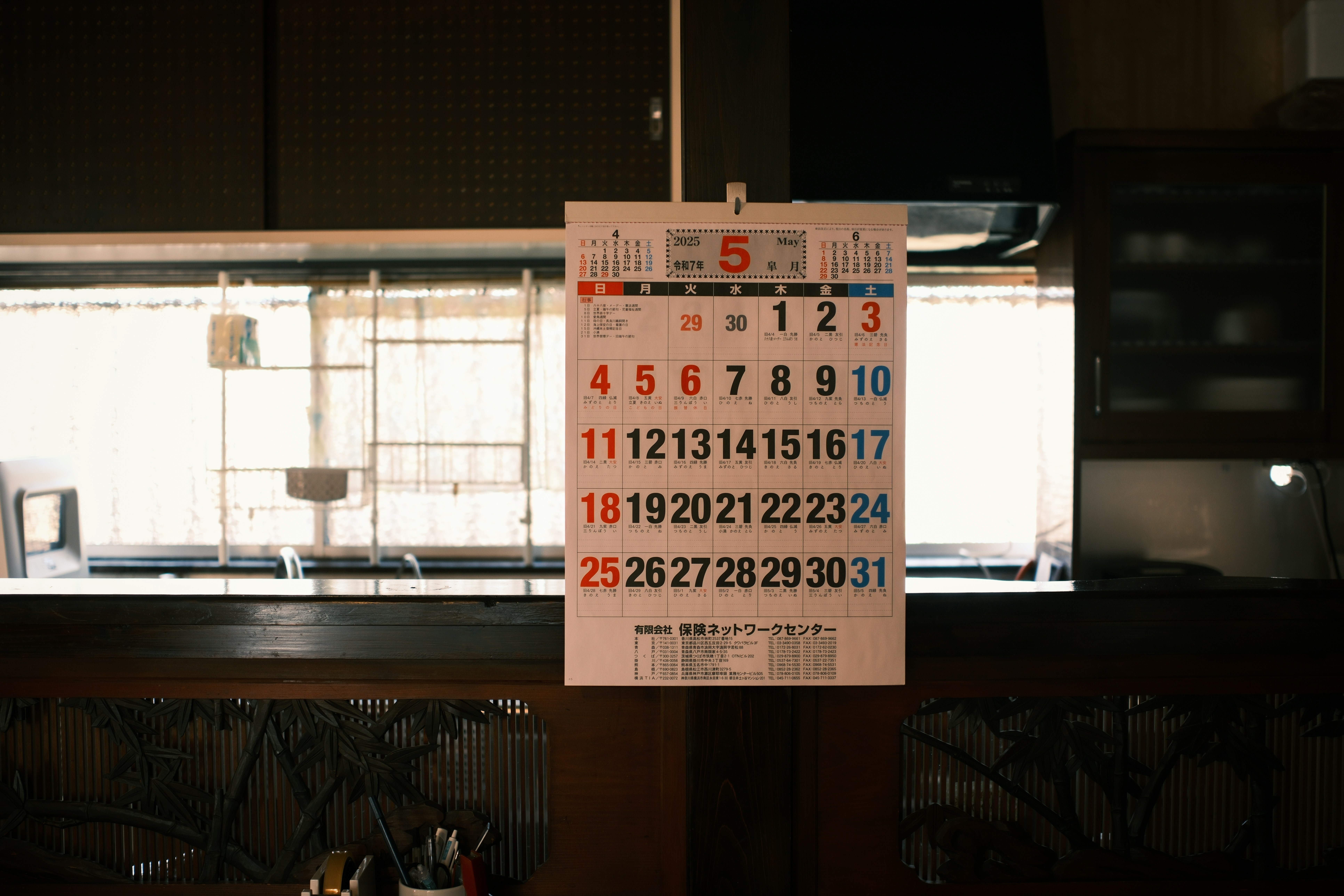
The classic: a month-to-view grid, one column per family member if you've gone for the "family organiser" style, hanging from a nail by the fridge.
What it does brilliantly. It's cheap — a few pounds, once a year. It never runs out of battery, never needs a password reset, and never shows a spinning loading icon at 7.42am. Writing on it is a small tactile ritual: the party invitation arrives, you walk to the wall, you write it in, and the act of writing helps you remember it. Children can read it from age five or six, and there's something quietly lovely about December's scribbled-over pages as a record of the year.
Where it falls down. It exists in exactly one place. If you're at work when the dentist offers you Thursday at 4pm, the calendar can't help you — you're accepting blind and hoping. It doesn't sync with anyone's phone, so appointments live in two places (wall and phone) or, more often, in one place and one person's head. And when a fixture moves, you're into crossings-out that make March look like a battlefield.
Best for families with fairly stable routines, one main organising adult who's home a lot, and a genuine fondness for the ritual. That's not a small group, and paper deserves more respect than it gets.
The whiteboard
Usually a week-to-view grid, wiped and rewritten every Sunday, often with a corner for the shopping list and someone's doodle of the dog.
What it does brilliantly. Flexibility. Plans change; whiteboards don't mind. The weekly rewrite is itself useful — it forces someone to look at the whole week ahead and copy in what matters, which is half the battle of family organisation. It's also the most glanceable format for children: "what's happening today" in letters four centimetres high beats any app.
Where it falls down. Wiping the board means losing history. Was the last swimming payment this term or last? When did that cough start? Gone. It only holds one week, so the school trip on the 24th of next month has to live somewhere else until its week arrives — and the gap between "somewhere else" and the board is where things get dropped. It also depends entirely on the Sunday rewrite happening; skip two weeks and the board becomes wallpaper.
Best for families who already have a reliable master calendar somewhere (paper or digital) and want a big, friendly weekly view driven off it. As the only system, it's fragile.
The screen
A tablet or dedicated display on the wall, showing a shared digital calendar that syncs with the adults' phones.
What it does brilliantly. It's always current. The appointment you accept on your phone at work appears on the kitchen wall before you're home, with no copying step — and the copying step is where paper systems quietly fail. Everyone sees the same version of the truth, including a co-parent in another house if you share the calendar. Colour-coding per child, recurring events for swimming and PE days, and reminders come free.
Where it falls down. Honesty time: it needs setting up, and the setup is a real evening's work — accounts, sharing permissions, mounting or propping the device, sorting power. It needs power permanently, which means a cable or a charging habit. If the household's calendar hygiene is poor, a screen just displays the emptiness in high resolution; it can't fix a calendar nobody fills in. And a screen invites fiddling in a way paper doesn't — worth thinking about where small fingers are concerned.
Best for families where both adults live in their phone calendars already, plans change often, and nobody can face being the human sync engine between wall and phone.
How to actually choose
There's no winner here, and anyone telling you otherwise is selling one of the three. A few honest matching questions:
- Who updates it? If one person happily owns the wall, paper works. If updates need to come from two phones and an office, you want sync.
- How often do plans change? Stable weekly rhythm suits paper; constant reshuffling suits whiteboard or screen.
- Do the kids need to read it? Whiteboards and big screens win for glanceability; a month grid in biro is hard for a six-year-old to parse.
- What died last time? If your last system failed because nobody copied things over, don't pick another system with a copying step.
Mixing is allowed, by the way. Plenty of families run a digital calendar as the master and a whiteboard as the weekly display — as long as everyone knows which one is the truth.
The one that gets looked at
The best kitchen calendar isn't the cleverest or the prettiest. It's the one your particular family, with your particular habits, will actually glance at every morning and actually update when the letter comes home crumpled at the bottom of the book bag.
Pick for your habits, not your aspirations — and give whatever you choose a full half-term before you judge it.